


Mapping Europe’s Advanced Digital Skills Demand: Inside the LEADSx2030 ADS Dashboard
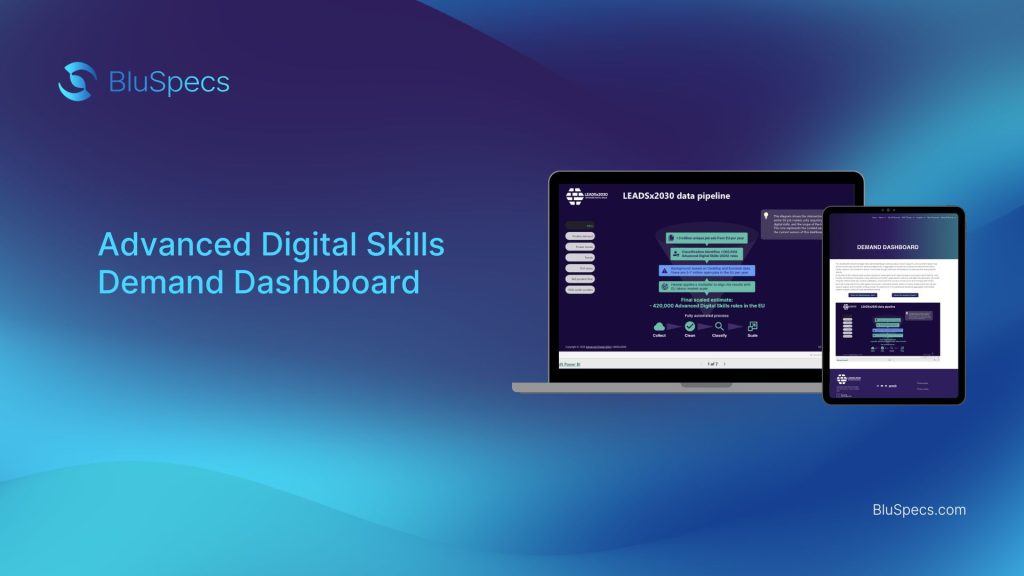
What digital skills will Europe need tomorrow and where are the gaps emerging today?
The LEADSx2030 Advanced Digital Skills (ADS) Demand Dashboard was built to help answer exactly that.
EADSx2030 brings together labour market, research and investment data to provide a clear, evidence-based picture of Europe’s evolving demand for advanced digital skills. At a time when the EU is working towards its Digital Decade targets, understanding skills demand is no longer optional, it’s strategic.
From raw data to actionable insight
At the core of the dashboard sits the LEADSx2030 ADS Data Model, which aggregates millions of data points from job advertisements, research publications and innovation funding records across Europe. Using a semantic AI framework, this diverse information is harmonised into a single model that supports both real-time analysis and forward-looking forecasts.
Rather than looking at skills in isolation, the model organises them into “skills pockets”clusters of related skills that reflect how capabilities appear and evolve in real-world settings. This approach allows consistent benchmarking across sectors, regions and time, making it possible to track trends, identify emerging needs and compare demand across industries.
How the dashboard works
Advanced methods such as natural language processing (NLP), graph-based clustering and digital twin generation are used to interpret structured and unstructured data at scale. The result is a dynamic dashboard that translates complex data into clear insights on where advanced digital skills are growing, stagnating or becoming critical.
All data presented is aggregated and scaled to reflect EU-wide trends, ensuring a reliable overview while protecting individual data sources.
Why it matters
For policymakers, educators, industry leaders and investors, the ADS Demand Dashboard offers a shared evidence base to guide decisions, from curriculum design and workforce planning to investment and policy development. It moves the conversation from assumptions to facts, supporting a more coordinated and future-ready approach to Europe’s digital skills challenge.
As coordinator of LEADSx2030, we is proud to help turn data into insight and insight into action supporting Europe’s journey towards a skilled, competitive and inclusive digital future.